
Founding and Early Years (1977–1980s)
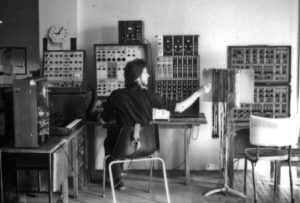
Harvestworks was founded in 1977 by artists Gregory Kramer and Gerald Lindahl in New York City as a nonprofit organization dedicated to supporting artists working with emerging technologies. In the late 1970s and early 1980s, it served as one of the few spaces in the U.S. where artists could access professional sound and electronic equipment. One of its first major programs was the Public Access Synthesizer Studio (STUDIO PASS), which offered artists the use of advanced tools such as Fairlight and Roland synthesizers, E-mu samplers, Yamaha systems, and early Apple computers.
In 1983, Harvestworks sponsored Tellus Audio Cassette Magazine, a seminal project that distributed experimental sound art and electronic music on cassette, documenting the early intersections of art, technology, and media. The organization moved to 596 Broadway in 1987, where it continues to operate today, solidifying its presence as a central hub for experimental sound and new media art in New York.
Expansion and Innovation (1990s–2000s)
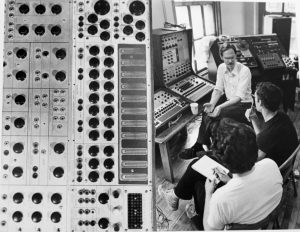
During the 1990s, Harvestworks evolved from a production studio into a comprehensive creative ecosystem that supported artists through technical assistance, residencies, and exhibitions. In 1992, it hosted one of the first public user groups for the programming language Max, marking its role as a pioneer in interactive and computer-based art.
Through the decade, Harvestworks expanded its mission beyond sound into digital video, interactive installations, and performance systems. The Technology, Engineering, Art & Music (TEAM) Lab was established as a collaborative production space for artists developing technologically complex works.
By the early 2000s, the organization became known nationally for combining education, production, and presentation, offering certificates, workshops, and individualized mentorship for both emerging and established artists. Around 2007, Harvestworks launched the New York Electronic Arts Festival (NYEAF), a major public event that presented electronic and digital art across New York City, including on Governors Island. This festival reinforced Harvestworks’ identity as both a laboratory and a public platform for technology-driven art.
Recent Decades (2010s–2020s)
In the 2010s, Harvestworks deepened its educational programs, offering certificates and one-on-one tutorials in Max/MSP/Jitter, digital audio, video production, and interactive media. The TEAM Lab became a cornerstone of its artist-in-residence and creative development programs, providing technical engineers and state-of-the-art equipment to help artists realize ambitious projects.
Harvestworks also established a consistent presence on Governors Island, presenting large-scale exhibitions, residencies, and workshops as part of its Art and Technology Program. These exhibitions have explored themes such as ecology, sound, artificial intelligence, and human–machine interaction, making the organization a vital part of New York’s summer cultural landscape.
Throughout this time, Harvestworks maintained its reputation as a place where artists help shape the future of technology and culture. It has supported 14,000 artists and remains committed to experimentation, education, and innovation.
Legacy and Influence
For nearly five decades, Harvestworks has stood at the intersection of art, sound, and technology. Its programs have fostered collaboration between artists, engineers, and researchers, influencing generations of experimental musicians, composers, media artists, and educators. The organization’s model—combining residencies, technical mentorship, education, and public presentation—has become a template for art-and-technology centers worldwide.
Harvestworks’ long history mirrors the evolution of electronic and digital art itself: from analog synthesizers and magnetic tape to interactive software, virtual reality, and AI-driven installations. Its enduring mission remains clear—to provide artists with the tools, knowledge, and support to create innovative works using new and evolving technologies.